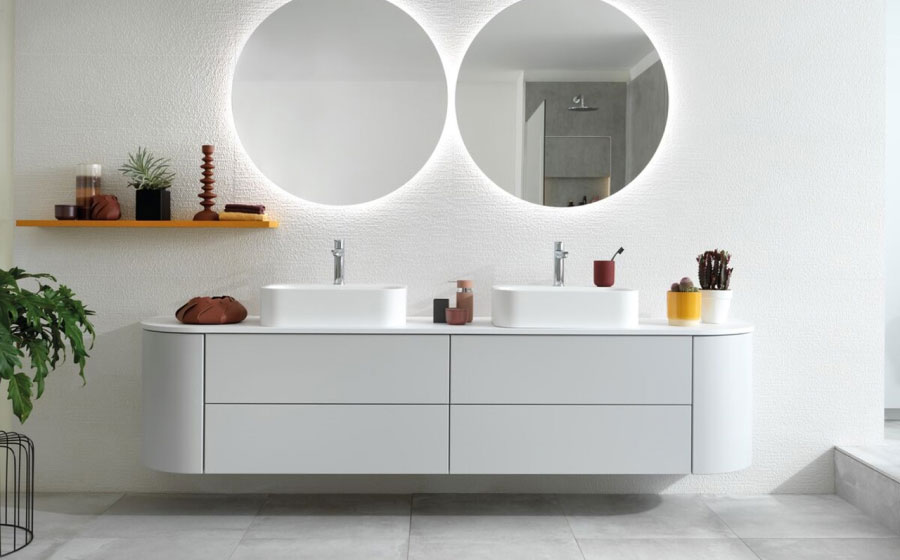
 If you’re shopping for illuminated vanity or bathroom fixtures, you’ve probably wondered: are LED bathroom mirrors safe? The short answer is yes—when sourced from reputable suppliers and used correctly, LED mirrors are a secure, practical addition to homes and commercial spaces. This guide breaks down their safety features, potential risks, and how to choose a reliable product that meets global standards.
Core Safety Advantages of LED Mirrors
Low-Voltage Electrical Design Reduces Shock Risks
- Isolated power supplies prevent direct contact between high-voltage household circuits and the mirror’s lighting system.
- Even if the mirror’s surface is damaged, the low voltage eliminates the risk of severe electric shock.
Minimal Heat Emission Lowers Fire Hazards
- LEDs convert 80–90% of energy into light (vs. 20% for incandescents), so the mirror frame stays cool to the touch even after hours of use.
- No excessive heat means no risk of igniting nearby flammable materials like towels or curtains, making LED mirrors safe for small, crowded bathrooms.
Waterproof Ratings for Wet Environments
| IP Rating | Water Resistance Level | Suitable Bathroom Zone |
|---|---|---|
| IP20 | No water protection | Dry zones (e.g., above vanity, away from shower) |
| IP44 | Resists splashing water from any direction | Damp zones (e.g., near sink, outside shower enclosure) |
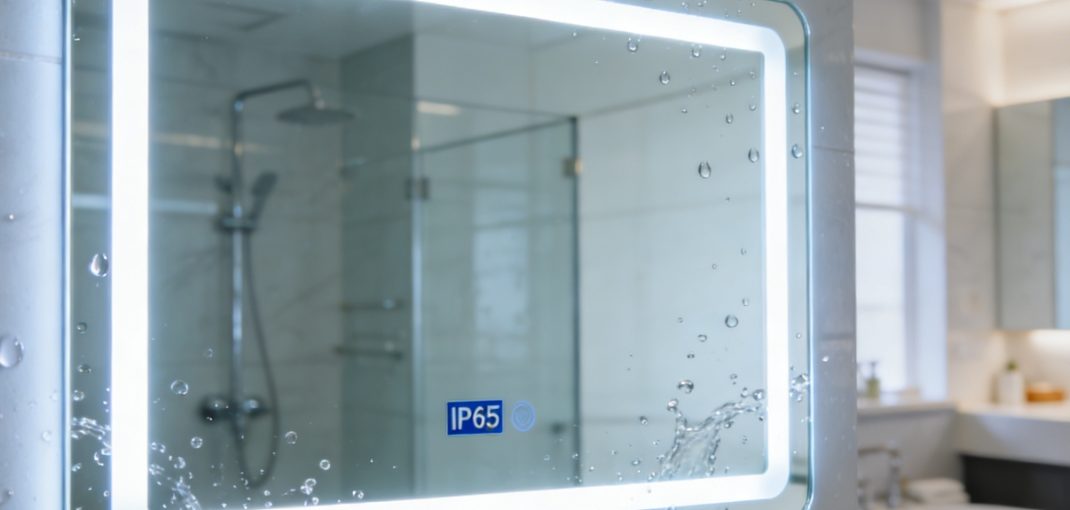
| IP65 | Fully dustproof; resists low-pressure water jets | Wet zones (e.g., inside shower stall, above bathtub) |
Explosion-Proof Physical Design
- High-quality models use tempered glass or are coated with explosion-proof film. If the mirror breaks, it shatters into small, blunt fragments instead of sharp, dangerous shards.
- Sturdy metal mounting brackets and wall anchors prevent falling accidents, even for larger, heavier LED mirrors with built-in defoggers or smart features.
Potential Safety Risks of LED Mirrors (and How to Avoid Them)
Risks of Non-Certified LED Mirrors
- Non-isolated power drivers that fail to properly reduce voltage, increasing shock risks.
- Inferior wiring and lack of waterproof sealing, leading to short circuits in humid environments.
- No explosion-proof treatment, resulting in sharp glass shards if broken.
Installation Mistakes That Compromise Safety
- Mounting an IP20 mirror in a shower zone (violating its waterproof rating).
- Failing to turn off the power supply during installation, leading to accidental shock.
- Using weak wall anchors for heavy mirrors, causing them to fall.
Eye Strain Risks From Poor Light Quality
How to Choose a Safe LED Mirror: A Step-by-Step Checklist
- Verify safety certifications: Look for CE, UL, or ETL marks on the product and packaging.
- Check the IP rating: Match the rating to your installation zone (IP44 minimum for damp bathrooms).
- Inspect physical safety features: Confirm the mirror uses tempered glass or explosion-proof film.
- Test light quality: Ensure the LED light is flicker-free and has adjustable brightness/color temperature.
- Review mounting hardware: Make sure the package includes sturdy brackets and anchors suitable for your wall type.
FAQ About LED Mirror Safety
Q1: Are LED mirrors safe to use in the shower?
A: Yes, but only if the mirror has an IP65 rating or higher. Lower-rated mirrors (IP20/IP44) are not designed for direct exposure to shower water and may pose electrical risks.
Q2: Can LED mirrors cause fires?
A: Certified LED mirrors have minimal heat output and overheat protection, so fire risk is extremely low. Fires only occur in rare cases where non-compliant mirrors are used or covered with flammable materials for extended periods.
Q3: Are LED mirrors safe for children’s bathrooms?
A: Absolutely. Choose a mirror with explosion-proof tempered glass, IP44 waterproofing, and flicker-free lighting to protect kids from physical harm and eye strain.
Q4: Is it safe to touch an LED mirror while it’s on?
A: Yes. The LED strips are embedded behind the mirror, and the low-voltage design ensures the mirror surface remains non-conductive. Accidental contact will not cause electric shock.
Q5: How do I confirm if an LED mirror is safe for my bathroom?
A: Cross-check the mirror’s IP rating with your bathroom’s moisture level. For dry zones, IP20 is acceptable; for damp zones, use IP44; for wet zones (showers), choose IP65 or higher. Always verify safety certifications before purchasing.