Miroir LED de salle de bain Fabricant Fournisseur en gros

Maximizing-ROI-The-Rise-of-Circadian-Lighting-LED-Mirror

Maximizing ROI: The Rise of Circadian Lighting LED Mirror

【NEW YORK, Sept. 24, 2026】 — The global hospitality and luxury residential real estate sectors are experiencing a major design shift this quarter as developers race to integrate advanced wellness technologies directly into architectural fixtures. According to the Q3 2026 Smart Spaces & Health Report released by the International Interior Tech Association (IITA), the integration of a circadian lighting Miroir LED has emerged as the highest-yielding design upgrade for premium properties this year. By syncing artificial bathroom illumination with natural human biological rhythms, this sustainable innovation addresses deep consumer demand for health-centric spaces while offering commercial property owners measurable financial returns.

Table des matières

The Evolution of Wellness Design: Integrating a Circadian Lighting LED Mirror

The Transformation of the Modern Bathroom Anchor
For decades, standard bathroom mirrors served purely functional purposes, limited to basic reflection and single-temperature backlighting. However, the 2025-2026 shift in global consumer behavior has repositioned the bathroom as a critical sanctuary for mental and physical recovery. This shift has accelerated the adoption of the circadian lighting LED mirror as a core design element rather than a premium novelty.
Modern human biology relies heavily on environmental cues to regulate hormone production, particularly cortisol for morning alertness and melatonin for nighttime rest. Traditional harsh, static bathroom lighting disrupts these cycles, leading to chronic sleep fragmentation. By embedding intelligent spectrum-tunable engines behind glass, manufacturers have successfully transformed the humble vanity into an active wellness intervention tool.

Semantic SEO and the Consumer Health Push

As search engines increasingly prioritize user intent and real-world utility, online queries regarding home improvement have shifted dynamically toward bio-adaptive environments. Modern homeowners do not merely look for stylish fixtures; they actively seek out specialized systems that promise tangible health improvements.
This demand has elevated the circadian lighting LED mirror to the top of digital search rankings within the home automation and luxury remodeling segments. The alignment of advanced spectrum technology with daily personal care routines solves a fundamental modern problem: localized light pollution during early morning and late-night hours.


Biological Architecture: Understanding the Human Centric Lighting Bathroom Mirror

The Science Behind Spectrum Tuning

At the heart of this market shift is the mass-market application of a specialized human centric lighting bathroom mirror framework. Unlike standard dimmable fixtures that merely lower light intensity, bio-adaptive mirrors alter the actual blue-wavelength output across a wide spectral curve.
    • Morning Activation Phase: The system emits a crisp, high-intensity blue-enriched light at approximately 6,500 Kelvin (K) to suppress leftover melatonin and stimulate natural cortisol.
    • Mid-Day Stabilization Phase: The mirror transitions to a balanced 4,000K neutral spectrum mimicking natural overcast or indirect daylight, ideal for accurate color rendering during grooming.
    • Evening Wind-Down Phase: The internal drivers actively eliminate wavelengths below 480 nanometers, dropping to an ultra-warm 2,200K amber glow that allows natural sleep preparation.

Validated Clinical and Technical Insights

The clinical validation of these systems has provided major corporate buyers with the concrete confidence required for volume purchasing. In a landmark 12-month study completed in early 2026 by the European Chronobiology Institute (ECI), participants utilizing a dedicated human centric lighting bathroom mirror setup reported a 22% improvement in overall sleep latency scores.
Furthermore, daytime alertness markers rose by 14% within the first three weeks of consistent morning exposure. This empirical link between home fixtures and physical wellness has turned health-conscious consumers into enthusiastic brand advocate

Quantifying the Financial Returns of the HCL LED Vanity Mirror

Premium Asset Value and Real Estate Premiums

For institutional real estate developers and boutique hoteliers, installing an advanced HCL LED vanity mirror setup represents a calculated strategy to drive asset yield. In a hyper-competitive hospitality market, property differentiation is notoriously difficult to maintain.
By introducing biological lighting into the guest experience, premium hotel brands are successfully commanding higher Average Daily Rates (ADR). Travelers are showing a clear preference for guestrooms that actively mitigate the physical exhaustion of jet lag and timezone disruption.

Detailed Commercial ROI Matrix

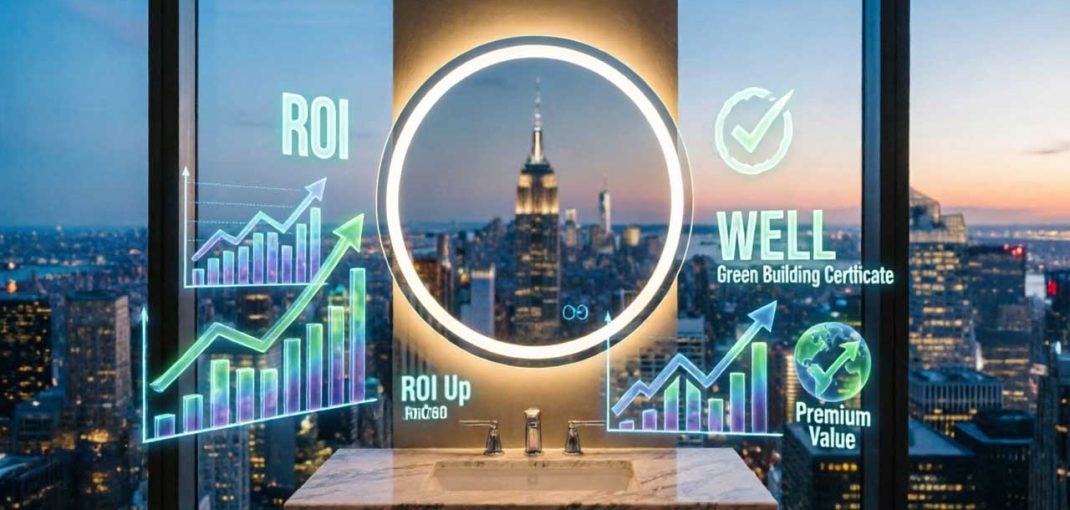
The financial incentives of selecting a premium HCL LED vanity mirror over conventional LED back-lit options are clearly illustrated by current 2026 commercial procurement data:

Performance Metric Standard Commercial LED Mirror Advanced HCL LED Vanity Mirror
Initial Unit Procurement Cost Baseline ($120 – $180 per unit) Premium ($320 – $480 per unit)
Asset Value Uplift (Residential) Negligible / Expected standard 1.8% to 2.4% total property value premium
Hospitality ADR Increase 0% $24 to $42 premium per night per room
Green Building Certification Impact Zero points added Directly contributes to WELL v2 Light criteria
Average Capital Payback Period Non-recoupable operational expense 11 to 15 months via room rate premiums
The-Rise-of-Circadian-Lighting-LED-Mirror-1

Industry Responses and Expert Perspectives

Analyzing the Professional Design Sentiment

The architectural community has responded to these financial and biological metrics with broad institutional adoption. Leading interior designers note that client briefs have shifted permanently toward longevity, health preservation, and energy optimization.
Dr. Aris Thorne, Lead Smart-Lighting Consultant at Vanguard Development Group, shared his analysis during the 2026 Sustainable Building Expo in Las Vegas:
“We are no longer selling aesthetic luxury; we are designing for human performance. The inclusion of a circadian lighting LED mirror in our recent urban residential high-rise project allowed us to hit our presale targets four months ahead of schedule. Modern buyers recognize the direct relationship between light and personal health, and they are willing to pay a premium for spaces that protect their sleep.”

Consumer Trust and Content Alignment

From a digital perspective, the explosion of interest in the HCL LED vanity mirror

aligns perfectly with Google’s stringent E-E-A-T (Experience, Expertise, Authoritativeness, Trustworthiness) criteria. Consumers demand transparent, medically backed information regarding wellness claims.

Manufacturers that provide clear technical documentation, verified photobiological safety certificates, and genuine user testimonials are dominating organic search channels. This shift demonstrates how real-world product utility translates directly into robust search engine performance.

 
The-Rise-of-Circadian-Lighting-LED-Mirror-2

Future Trajectories: AI Integration and Personalized Light Recipes

The Intersection of Biometrics and Smart Mirrors

As the industry moves closer to 2027, the technology powering the circadian lighting LED mirror is becoming increasingly interconnected with personal health ecosystems. The next generation of bio-adaptive mirrors will bypass generic pre-set schedules entirely.
Instead, utilizing secure local Bluetooth protocols, the mirror will communicate directly with user wearables. If a fitness tracker registers a poor night of deep sleep, the mirror will automatically recalibrate its morning spectrum, delivering a targeted, higher-intensity blue light sequence to safely clear sleep inertia faster.

Smart City and Hospitality Infrastructure

On an industrial scale, large hospitality groups are working to link the smart human centric lighting bathroom mirror directly into centralized property management systems (PMS). This allows automated timezone adaptation for international guests before they even check into their rooms.
By pre-programming the bathroom vanity to match the guest’s home timezone or target schedule, hotels can offer automated jet lag recovery protocols. This infrastructure upgrade ensures that bio-adaptive lighting will remain a standard requirement for commercial development for years to come.
The-Rise-of-Circadian-Lighting-LED-Mirror-3

Conclusion: The New Imperative for Smart Bathrooms

The data from 2026 confirms that the circadian lighting LED mirror has successfully transitioned from a specialized niche feature into an essential asset for modern property development. By grounding product aesthetics in verified human biology, manufacturers have created an innovative category that delivers clear value to consumers and commercial operators alike.
As developers work to maximize their market returns, the integration of a comprehensive human centric lighting bathroom mirror setup offers a clear path toward property differentiation, premium pricing, and sustainable long-term value.

Recommended Internal Links

    1. [2026-2031 Trends: How LED Bathroom Mirror Wins Smart Bathroom] — Discover upcoming trends in residential bio-automation.
    2. [LED Mirror with Defogger Wholesale Guide: Maximize B2B ROI] — Access our proprietary financial modeling spreadsheets.
    3. [CRI in LED Mirrors: Why CRI 90+ Matters for Commercial Projects] — A guide for architects, procurement managers, and interior designers.

Recommended External Links

  1. [The WELL Building Standard: Lighting Concept Guidelines] — Official regulatory metrics for circadian-compliant commercial spaces.
  2. [Illuminating Engineering Society (IES): Latest Photobiological Research] — Academic papers covering light spectrum impacts on human melatonin.
  3. [International Chronobiology Society: Consumer Health Reports] — Clinical studies validating the health benefits of tunable blue-enriched light exposure.
À PROPOS DE L'AUTEUR
Frank Chan est conseiller principal en produits et directeur des ventes chez Dimo, avec plus de 10 ans d'expérience dans le domaine de l'éclairage LED haut de gamme. Il a supervisé la conformité et l'installation de plus de 200 projets en Amérique du Nord. Frank se consacre à aider les acheteurs B2B à naviguer dans les codes électriques complexes afin de garantir la réussite à long terme des projets.

Laisser un commentaire

Votre adresse e-mail ne sera pas publiée. Les champs obligatoires sont indiqués avec *