Indice dei contenuti
Integrazione intelligente: Passare dal semplice controllo tattile all'interazione reale
Nei dati delle parole chiave di ricerca B2B, Integrazione intelligente è salito al vertice. Gli acquirenti si aspettano che gli specchi a LED vadano oltre la semplice commutazione on/off e supportino un'interazione multimodale più avanzata.
1. Connessione perfetta con gli ecosistemi IoT e vocali
I moderni acquirenti B2B, in particolare gli sviluppatori di appartamenti e gli integratori di case intelligenti, preferiscono prodotti che supportano i protocolli Matter o Zigbee. In questo modo gli specchi LED diventano componenti connessi che funzionano con l'illuminazione dell'intera casa, le tende e la musica di sottofondo. L'integrazione con Alexa, Google Assistant o HomeKit consente agli utenti di regolare la temperatura del colore con semplici comandi vocali. Questa esperienza a mani libere è diventata una caratteristica chiave nei progetti immobiliari di fascia alta.
2. Display invisibile e integrazione delle informazioni
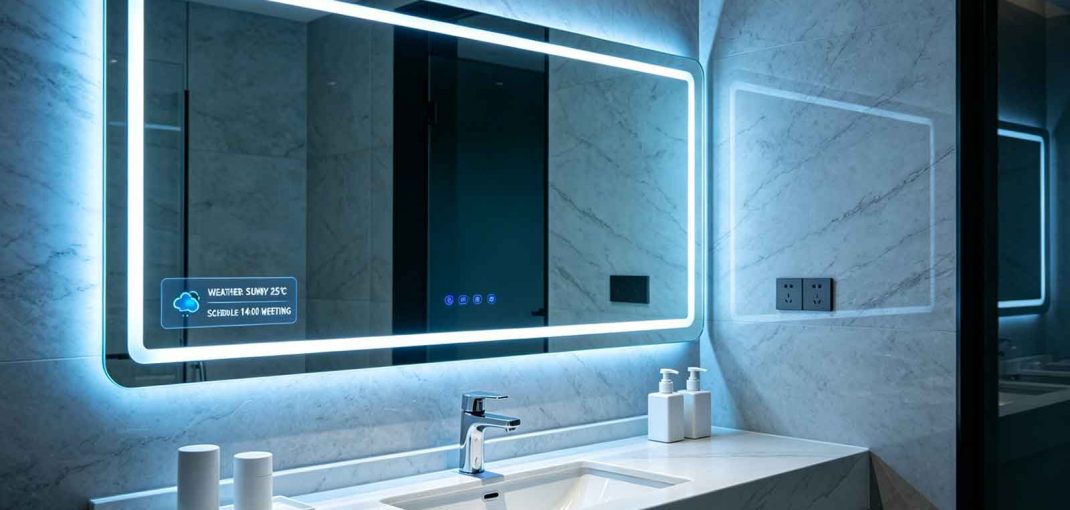
Il concetto di Lo specchio come schermo sta guadagnando terreno. Quando è spento, rimane uno specchio d'argento pulito e di alta qualità; quando viene attivato, lo schermo ultrasottile incorporato mostra in tempo reale il meteo, il traffico, gli aggiornamenti sulle scorte o i promemoria. Negli appalti alberghieri, questi specchi fungono da “concierge virtuali”, consentendo agli ospiti di prenotare servizi o controllare eventi direttamente sullo specchio.
Personalizzazione approfondita per i settori verticali: Costruire un vantaggio competitivo
Il mercato B2B sta diventando sempre più frammentato e richiede ai fornitori una profonda comprensione di scenari specifici. Oggi si distinguono tre segmenti verticali in forte crescita:
1. Ospitalità e alloggio: Concentrarsi sulla durata e sulla coerenza del marchio
Per le grandi catene come Hilton e Marriott, i trend di ricerca sottolineano Manutenzione semplice e coerenza del marchio.
- Gli hotel spesso preferiscono design retroilluminati antiriflesso per creare un'atmosfera premium.
- Il design modulare, che facilita la sostituzione di driver e strisce luminose, contribuisce a ridurre i costi operativi a lungo termine.
2. Sanità e benessere: L'intelligenza artificiale come punto di ingresso
Questo segmento è in rapida crescita. Ricerche per Specchio per l'analisi della pelle AI sono aumentati in modo significativo nelle query B2B.
- Le cliniche di estetica medica e i centri benessere di alto livello cercano specchi intelligenti con illuminazione ad alto CRI (>95) e telecamere di ingrandimento per analizzare l'idratazione della pelle, le linee sottili e i danni da raggi UV.
- Specchi pronti per la telemedicina con connessioni al medico con un solo clic stanno entrando nelle comunità senior di alto livello.
3. Commercio al dettaglio e fitness: Il potere dell'AR
Nei flagship store come Nike e Lululemon, gli specchi LED fungono da “assistenti al fitting”. Modelli interattivi con fitting AR, riproduzione di video a 360° e condivisione sui social media aiutano i rivenditori a migliorare i tassi di conversione offline.
Segmenti verticali chiave e domanda principale
|
Industria
|
Bisogni fondamentali
|
Applicazioni tipiche
|
|---|---|---|
|
Ospitalità
|
Facile manutenzione, coerenza del marchio, retroilluminazione antiriflesso, riparabilità modulare
|
Hilton, Marriott, resort di alto livello
|
|
Assistenza sanitaria e benessere
|
Analisi della pelle AI, CRI >95, connettività telemedicina
|
Cliniche, centri di bellezza, comunità per anziani
|
|
Vendita al dettaglio e fitness
|
Montaggio AR, replay a 360°, condivisione sociale
|
Negozi di marca, palestre
|

Sostenibilità: Il “Green Pass” per entrare nei mercati europei e americani
Dopo il 2024, la tutela dell'ambiente non sarà più uno slogan ma una barriera commerciale tangibile. Nei contratti di appalto B2B in Europa (soprattutto Germania, Francia e Paesi nordici), le clausole ambientali rappresentano una percentuale crescente di anno in anno.
1. Tecnologia a specchio senza piombo e senza rame
2. Efficienza energetica e ciclo di vita
Catena di approvvigionamento globale e distribuzione del mercato
1. Lato domanda: Nord America in testa, Asia-Pacifico in crescita
- Mercato nordamericano: È ancora il mercato di consumo più grande al mondo, con una domanda forte e sostenuta di specchi intelligenti nei progetti di ristrutturazione residenziale, che privilegiano soprattutto i design oversize e minimalisti senza cornice.
- Mercato mediorientale: Spinta da mega-progetti come il NEOM dell'Arabia Saudita, la domanda di specchi intelligenti di lusso e altamente personalizzati sta crescendo in modo esponenziale.
-
Gli acquirenti dovrebbero privilegiare i fornitori con un supporto localizzato per ridurre i tempi di consegna.
2. Lato offerta: Il passaggio della produzione cinese dalla “quantità” alla “qualità”.”

Mappa delle tendenze della ricerca di acquirenti B2B
- Funzioni principali: Antiappannamento Specchio LED Bluetooth, Specchio a temperatura di colore regolabile
- Scenari professionali: Specchi da bagno per il settore contract, specchi illuminati a norma ADA
- Tecnologia all'avanguardia: Specchio intelligente con sistema operativo Android, Specchio di cortesia ad attivazione vocale
Conclusione: La parola chiave per il successo futuro è “limite”.”
Domande frequenti (FAQ)
R: La combinazione di integrazione intelligente (in particolare il protocollo Matter) e materiali sostenibili. Gli specchi illuminati di base non sono più sufficienti per gli acquirenti di fascia alta: i prodotti personalizzati abilitati all'IoT stanno diventando il mainstream.
R: Cercate standard di livello contrattuale: superficie a specchio priva di rame, LED ad alto CRI, lunga durata di L70, riscaldamento antiappannamento e supporto affidabile della catena di fornitura. Richiedete sempre dei campioni per effettuare test reali.
R: Il prezzo dell'unità può essere inizialmente 10-25% più alto, ma la riduzione della frequenza di manutenzione e il miglioramento dell'esperienza degli ospiti spesso consentono di ammortizzare il costo entro 1-2 anni. Molti progetti alberghieri li considerano ormai come elementi di valore aggiunto.
R: Sì. Supportiamo la personalizzazione completa, dalle dimensioni all'illuminazione, fino ai moduli intelligenti. Non esitate a condividere i disegni del vostro progetto: possiamo fornirvi rapidamente preventivi e campioni.
Riferimenti
- Intelligenza di Mordor. (2026). Mercato degli specchi intelligenti - Dimensioni, quota e previsioni. Recuperato da https://www.mordorintelligence.com/industry-reports/smart-mirror-market
(Si parla di una dimensione del mercato globale degli specchi intelligenti pari a 4,92 miliardi di dollari nel 2026, con una crescita ad un tasso CAGR di 8,42% fino a 7,37 miliardi di dollari entro il 2031). - Fortune Business Insights. (2026). Dimensioni, quota e analisi del mercato degli specchi intelligenti. Recuperato da https://www.fortunebusinessinsights.com/smart-mirror-market-104616
(citato per ulteriori approfondimenti sulla crescita del mercato e sulla posizione di leader del Nord America nel settore degli specchi intelligenti).
Frank Chan è Senior Product Consultant e Sales Manager di Dimo, con oltre 10 anni di esperienza nell'illuminazione a LED di fascia alta. Ha supervisionato la conformità e l'installazione di oltre 200 progetti in tutto il Nord America. Frank si dedica ad aiutare gli acquirenti B2B a districarsi tra i complessi codici elettrici per garantire il successo a lungo termine dei progetti.