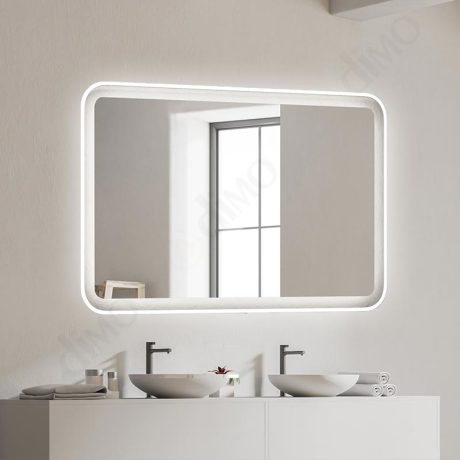
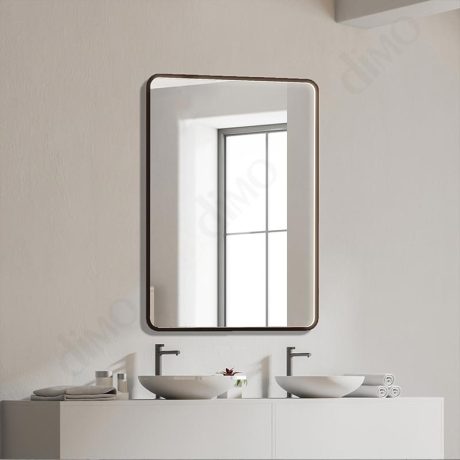
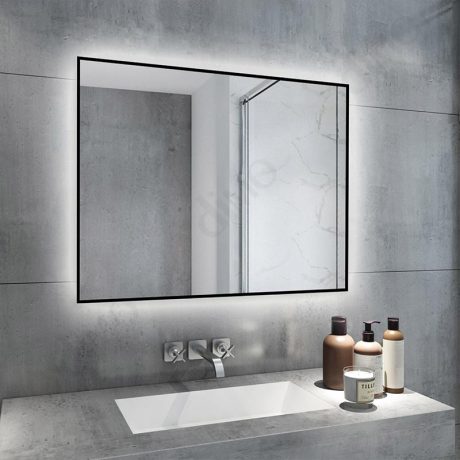
Bathroom LED Mirror Manufacturer Wholesale Supplier

LED-Bathroom-Vanity-Mirror-Manufacturers

10 Best LED Bathroom Vanity Mirror Manufacturers: Factory Guide

An LED mirror is far more than a simple glass pane backed by a strip of lights. In commercial projects, hotel overhauls, or custom residential builds, these fixtures act as critical electrical appliances that operate in highly humid, high-use environments. A poor manufacturing choice will fast-track your project toward corroded glass edges, flickering drivers, and failed building inspections.

As a sourcing specialist who has managed bathroom hardware procurement for over a decade, I have seen it all. I have navigated the headache of unboxing a container of 500 mirrors only to realize the drivers lack local compliance stamps. I have also dealt with the nightmare of “black edge” rust showing up on luxury hotel mirrors just six months after installation.

Choosing the right LED bathroom vanity mirror manufacturer requires looking past glossy catalog renderings. You need to understand who actually controls the raw engineering.

Let us break down the global manufacturing landscape. I will share our hard-earned sourcing matrix, look at the top 10 factories shaping the market, and help you find the exact supplier for your project specifications.

Table of Contents

The Blind Spots in Bathroom LED Mirror Sourcing

Most buyers focus entirely on the wholesale price and the outer frame finish. That is a massive mistake. When we evaluate an OEM/ODM factory, we run their specs through a strict technical checklist based on international engineering standards.

1. Copper-Free Mirror Glass (The Fight Against Oxidation)

Traditional mirrors rely on a copper layer to protect the silver backing. In a steamy bathroom, moisture penetrates the edges, causing the copper to oxidize. This creates unsightly black or brown rust creeping into the glass. We only source from manufacturers using copper-free glass (typically defined by ASTM C1503 standards) [1]. These mirrors use a specialized metal primer layer that increases corrosion resistance by up to three times compared to standard glass.

2. Component Compliance and Certifications

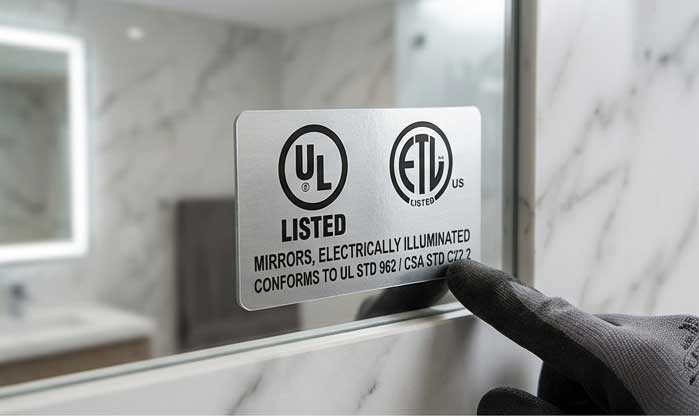
An LED mirror is a hardwired appliance. If you install a mirror without proper electrical certification, your commercial building will fail inspection. Worse, you face massive liability if a short circuit occurs. Depending on your market, the entire mirror assembly—not just the LED strip—must carry valid stamps:
  • North America: UL 962 or ETL listed [1].
  • Europe: CE compliance and RoHS certification [1].
  • Australia/NZ: SAA certification [1].

3. Lighting Precision (CRI and R9 Values)
Have you ever looked in a bathroom mirror and noticed your skin tone looks completely washed out or slightly green? That is the result of low-quality LED chips. For precise tasks like makeup application or shaving, the Color Rendering Index (CRI) must be above 90. Furthermore, the R9 value (which measures how accurately the light renders saturated red tones) needs to be high. We look for factories that commit to tight MacAdam ellipse binning to ensure color temperature remains identical across hundreds of units.

 
UL vs ETL certification compliance check for B2B LED mirrors

Global Sourcing Matrix: Top Factories At-a-Glance

Before diving into the detailed factory profiles, this comparative breakdown shows how the top tiers stack up across key commercial metrics.

Manufacturer / Factory Primary Location Target Segment Strengths Certifications Key Customization Level
Electric Mirror United States Ultra-Luxury / Hospitality Smart home & TV integration UL, cUL [1] High (Premium Pricing)
DIMO China Mid-to-High Global Projects Ultra-slim design, flexible engineering UL, CE, ETL, CSA,RoHS [1] Maximum (High Flexibility)
Schneider Switzerland Premium Residential / Europe Aluminum mirror cabinet engineering CE, IP44 [1] Moderate (Modular)
Seura United States High-End Residential / AV Vanishing screen & audio integration UL, cUL [1] High (AV focused)
AGC Glass Belgium / Global Raw Material / Mega Projects Elite raw float glass & silvering CE, ISO 9001 [1] Low (Bulk Supply)
Kohler Co. Global Network Full-Suite Standard Luxury Smart ecosystem connectivity Global standards [1] Low (Standard Catalog)
Majestic Showers United Kingdom Bespoke Architectural Frameless cutting & heritage metalwork CE [1] High (Bespoke Craft)
Remer Australia Modern Apartment / Retail Sleek Bluetooth & infrared integration SAA [1] Moderate (Regional Stock)
Dapha United States Healthcare & Hospitality Commercial anti-fog heating pad tech UL [1] Moderate (Functional)
Foshan Mirror Cluster China Mass Market E-Commerce Extreme cost control & volume output Varies by workshop Low (Fixed Sizes)

10 Best LED Bathroom Vanity Mirror Manufacturers

1. Electric Mirror (USA)

Electric Mirror essentially created this product category. Based in the Pacific Northwest, they dominate the ultra-luxury hospitality market in North America. If you walk into a Ritz-Carlton or a Four Seasons, you are likely looking into one of their units.
They hold a massive patent portfolio covering everything from integrated dimming systems to laser-patterned glass. Their manufacturing focus centers heavily on high-end technology integration. Think hidden smart TVs that vanish completely when turned off, built-in digital clocks, and complex wellness lighting systems. The drawback? Their lead times are often long, and their pricing sits at the absolute peak of the market. They are an ideal choice if your project budget is virtually unlimited and you need a prestigious American brand name attached to the submittal forms.

2. DIMO (China)

Operating through their dedicated engineering hub at ledmirrormanufacturer.com, DIMO represents the sweet spot for modern commercial sourcing. I often point developers and design agencies toward DIMO when they need hotel-grade quality but cannot swallow the premium markup of western branding houses.
DIMO operates as a true OEM/ODM contract manufacturer. They excel in structural engineering, particularly with ultra-slim chassis designs that allow the mirror to sit completely flush against bathroom tiling without bulky protrusions. Safety forms a core pillar of their production line; they utilize multi-layered, shatter-proof glass treated with high-durability explosion-proof backing film.
What sets them apart from rigid mass-production factories is their flexible customization. If you send them a raw CAD drawing for an irregular, asymmetrical back-lit mirror with an integrated touch sensor and custom-sized defogger pad, their engineering team can prototype it rapidly. They maintain full global compliance with clean UL, CE, and SAA certifications, making them a highly reliable backbone supplier for mid-to-high-end global developments.Their comprehensive catalog of products includes the
DIMO LED BATHROOM VANITY MIRROR MANUFACTURER PLANT VIEW

3. Seura (USA)

Seura is the direct competitor to Electric Mirror in the high-end audiovisual integration space. They began with a focus on outdoor TVs and quickly realized that the same waterproofing and high-brightness technology translated perfectly to the bathroom vanity.
Their mirrors are engineered to deliver crisp, bright video displays through the glass face. They have mastered the tricky balance of mirror reflectivity versus screen transmittancy. When the integrated TV is off, the glass behaves like an flawless, uncompromised mirror. For high-end residential master suites or luxury spa lounges where clients demand seamless smart-home automation, Seura is tough to beat.

4. Schneider (Switzerland)

If your project is located in Europe or demands a strict minimalist European aesthetic, Schneider is an exceptional manufacturing partner. They do not just make flat wall mirrors; they are masters of the illuminated aluminum mirror cabinet.
Schneider treats mirror construction like watchmaking. Their aluminum extrusion lines create incredibly rigid, twist-free cabinet bodies that survive decades in damp environments. Every hinge, soft-close mechanism, and internal glass shelf tracking system is engineered to perfection. Their LED integration is typically clean, diffused, and built directly into the cabinet doors, offering a seamless mix of ambient storage lighting and functional task lighting.

5. AGC Glass (Belgium)

AGC stands as an absolute titan in raw glass production. They do not assemble small-scale custom LED mirrors for a local boutique hotel. Instead, they supply the elite-grade raw material that makes high-end mirrors possible.
Their Mirox range of eco-friendly, copper-free, and lead-free mirrors sets the baseline for reflection clarity and environmental standards worldwide. For massive, multi-tower developments where an international glazing contractor is building custom mirrored walls on-site with integrated LED tracking, sourcing raw mirror sheets directly from AGC ensures that the glass will never warp, distort, or delaminate.

6. Kohler Co. (Global Supply Network)

Kohler is a household name in kitchen and bath plumbing fixtures, but their lighting and mirror manufacturing division is equally robust. Kohler leverages a vast global supply chain to produce highly standardized, beautifully finished LED vanities.
Their engineering strength lies in ecosystem connectivity. Through their Kohler Konnect platform, their LED mirrors sync flawlessly with smart showers, automated toilets, and voice-controlled lighting dimmers. If your procurement strategy relies on a single-source warranty package where the faucets, vanities, toilets, and mirrors all come under one corporate umbrella to simplify project management, Kohler is a very safe corporate option.

7. Majestic Showers (UK)

Based in the United Kingdom, Majestic is a favorite among London’s high-end architects and historic restoration specialists. They are a boutique manufacturer that blends traditional glass cutting with clean, modern low-voltage LED systems.
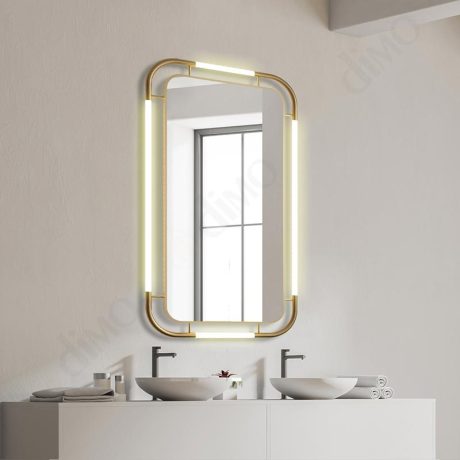
They shine when a project calls for specialized metal frames to match unique bathroom ironmongery. Whether you need an LED mirror enclosed in oil-rubbed bronze, brushed champagne gold, or antique copper, Majestic delivers hand-finished detailing that automated factories simply cannot replicate. They are built for bespoke residential work and luxury commercial spaces where every single bathroom features slightly different dimensions.

8. Remer (Australia)

Remer dominates the Oceania market with a sharp focus on forward-thinking, retail-ready designs and rapid commercial supply. They have carved out a niche by making premium features standard across their catalog lines.
Remer mirrors frequently feature integrated Bluetooth audio speakers, infrared hands-free sensors, and digital clocks embedded cleanly beneath the silvering. Their designs emphasize a distinct Australian modern luxury style—clean lines, rounded rectangles, and organic shapes paired with bright, reliable backlighting. They hold strict SAA approvals, making them the go-to supplier for Australian multi-residential developments.

9. Dapai (China)

Dapai is a specialized, functional manufacturer that approaches mirror design from a utility-first perspective. They are deeply entrenched in the hospitality and healthcare sectors across China.
Dapai’s claim to fame is their early mastery of low-voltage heating pad technology. Their defogging systems are incredibly efficient and designed to run continuously in commercial spaces without burning out or creating hotspots behind the glass. They also manufacture specialized anti-ligature mirrors for psychiatric facilities and high-durability options for medical centers, prioritizing safety and utility over purely decorative aesthetics.

10. Foshan Mirror Cluster Factories (China)

Foshan is the undisputed heart of the world’s ceramic and sanitary ware manufacturing. The region hosts hundreds of smaller mirror workshops and medium-sized factories operating under a shared supply chain.
When you see a standard, budget-friendly LED mirror sold online through major home improvement retailers, it almost certainly originated from a Foshan production line. These operations offer incredible cost advantages due to their massive scale. They are the ideal sourcing choice for high-volume, low-margin projects like economy student housing or budget motel renovations where keeping the cost per unit down is the primary metric of project success.

A Real-World Lesson: Sourcing Lessons from the Field

A few years ago, I consulted on a luxury coastal condo development in Miami. The project team had initially bypasses professional engineering factories and purchased cheap, unbranded LED mirrors from an online marketplace vendor to save $45 per unit.
Six months post-handover, the ocean humidity took its toll. Over 40% of the mirrors began developing severe black edge rust because the glass wasn’t copper-free. Even worse, the drivers inside the walls emitted a faint, annoying buzzing sound whenever the lights were dimmed. We had to rip out the entire batch.
We ended up partnering with an engineering-focused OEM supplier—similar to DIMO—to manufacture custom-fit, copper-free replacements with certified, silent-running dimmable drivers. The cost of the replacement, combined with emergency labor fees, ended up being triple the cost of doing it right the first time. The biggest lesson? Always verify your factory’s testing logs before signing the deposit check.

How to Match Your Project to the Right Manufacturer

Sourcing successfully means matching your real-world constraints to a factory’s natural operational workflow.
If you are managing a high-profile boutique hotel project that requires premium, hotel-grade durability, customizable features, and strict electrical certifications—but you still need to maintain a healthy profit margin—your best move is to contact an experienced contract manufacturer like DIMO (ledmirrormanufacturer.com). They provide the precise engineering and customization support required by architects without the staggering markups of western retail branding firms.
On the other hand, if your project involves a massive, tight-budget residential build where individual design choices take a backseat to rock-bottom costs, sourcing a standardized catalog size directly from a high-volume factory cluster in Zhejiang will keep your numbers where they need to be. For ultra-premium residential penthouses where cost is no object and advanced smart-home audio-visual setups are non-negotiable, investing in a specialized manufacturer like Electric Mirror or Seura will deliver the high-tech prestige your clients expect.


People Also Ask (FAQ)

What is the difference between front-lit and back-lit LED mirrors?
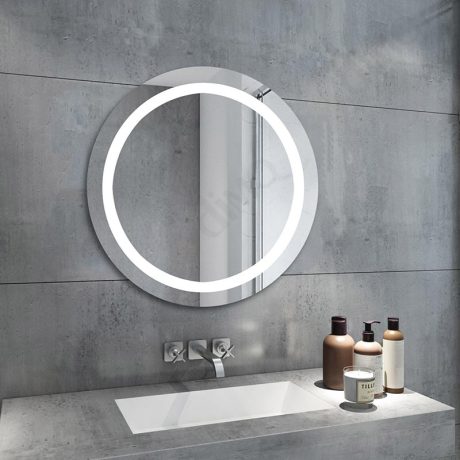
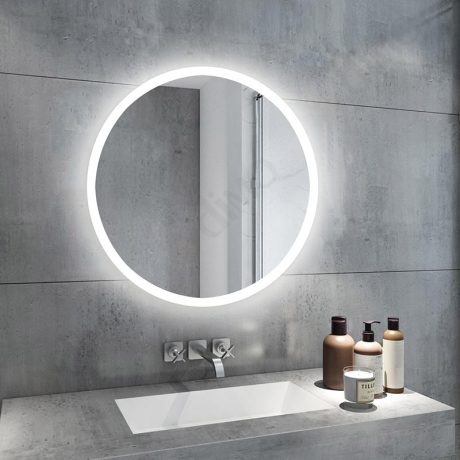
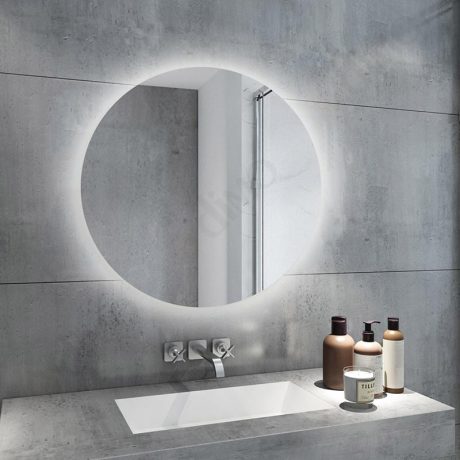
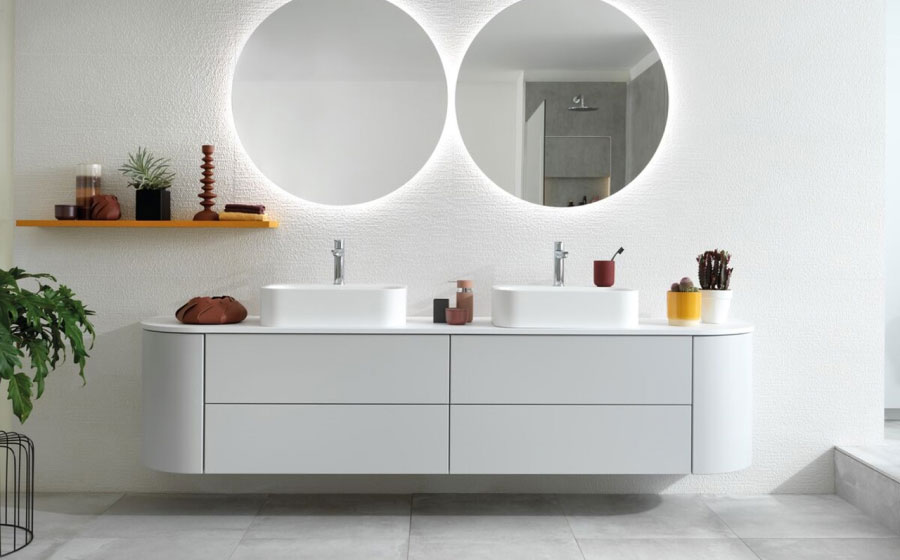
Front-lit mirrors throw light directly forward through a frosted glass cutout, acting as an excellent functional light source for makeup application or shaving. Back-lit mirrors mount the LEDs behind the chassis, casting a soft, ambient glow against the wall to create a floating visual effect. Many commercial projects now utilize dual-source mirrors that feature both options on independent circuits.
How long do bathroom LED mirror lights typically last?
High-quality LED strips from reputable manufacturers are rated for roughly 50,000 hours of continuous use. In a typical residential setting, this equals more than 10 to 15 years of operation. However, the lifespan is heavily dependent on the quality of the internal driver; a cheap driver will fail long before the LEDs themselves burn out.
Can you replace the LEDs inside a bathroom vanity mirror?
In standard, cheap consumer retail mirrors, the LED strips are frequently sealed completely inside the chassis with silicone adhesive, making them impossible to replace cleanly. Professional engineering factories design their mirrors with accessible channels or modular backplates, allowing a qualified electrician to swap out an LED strip or a power driver in minutes without discarding the glass mirror face.

References & Industry Standards

ABOUT AUTHOR
Frank Chan is the Senior Product Consultant & Sales Manager at Dimo, with over 10 years of experience in high-end LED lighting. He has overseen the compliance and installation of over 200 projects across North America. Frank is dedicated to helping B2B buyers navigate complex electrical codes to ensure long-term project success.

Leave a Reply

Your email address will not be published. Required fields are marked *