Espelho LED para casa de banho Fabricante Fornecedor grossista

Bathroom-Mirror-Anti-Fog-Tech-Heated-Pads-vs-Coatings

Bathroom Mirror Anti-Fog Tech: Heated Pads vs. Coatings

If you are an architect, hotel procurement manager, or a espelho inteligente brand owner, you have likely faced the classic hospitality complaint: a guest steps out of a hot shower, and the bathroom mirror is completely blinded by steam. To solve this, you need a reliable solution. Choosing the right tech can save you thousands in maintenance, or conversely, trap you in an endless loop of customer complaints.

As an experienced anti fog mirror manufacturer, we see clients struggle to balance initial costs against long-term performance. You usually have two choices for keeping glass clear: electric heated pads or chemical hydrophilic coatings.

Let us dive deep into the real-world performance, hidden costs, and technical realities of both technologies in commercial bathroom environments.

Índice

The Core Difference: How They Defog Your Bathroom Mirror

The physics behind these two methods are entirely different.
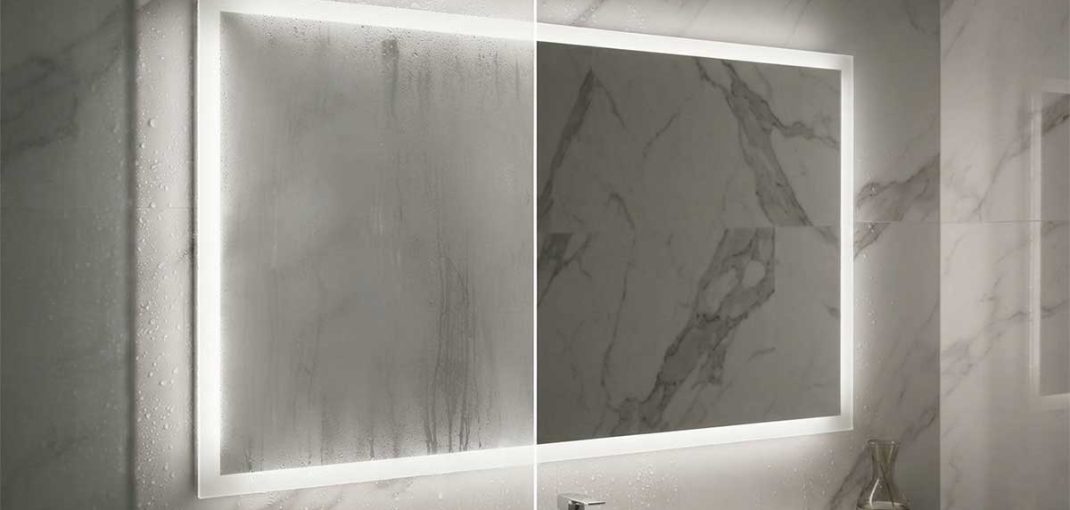
An anti-fog mirror using a heated pad relies on thermal evaporation. By raising the glass temperature above the dew point of the humid bathroom, it stops water vapor from condensing in the first place. You get a completely bone-dry surface.
Chemical coatings take a different approach to a fog free mirror. They utilize a hydrophilic layer to destroy the surface tension of water droplets. Instead of forming tiny, light-scattering beads (fog), the moisture flattens into a micro-thin, transparent sheet of water. The glass looks clear, but it is actually wet.

Quick Comparison Matrix (Bathroom Metrics)

Here is a transparent look at how these technologies stack up against each other under intense, daily bathroom usage.

Performance Metric Heated Defogger Pads Hydrophilic Anti-Fog Coatings
Defogging Speed 2–3 minutes to clear zone Instantaneous upon moisture contact
Clarity Quality 100% bone-dry, crystal-clear Clear but can suffer from water-sheeting distortion
Lifespan 10+ Years (Matches mirror lifetime) 3 to 6 months (Requires frequent reapplication)
Maintenance Required Zero Regular cleaning restriction & re-coating
Initial Hardware Cost Moderate to High Muito baixo
Installation Effort Requires electrical wiring & backing assembly Spray, wipe, or factory-cured film
Mirror Edge Protection High (Keeps the back of the mirror dry) None (Front surface application only)

BATHROOM ANTI-FOG TECH Commercial ROI & Performance Comparison | DIMO Insights HEATED DEFOGGER PAD ANTI-FOG COATING Working Principle How it fights steam Thermal Evaporation Raises glass temp above dew point. Hydrophilic Layer Flattens droplets into transparent film. Lifespan & Durability Commercial replacement cycle 10+ Years Matches the lifetime of the mirror 3 – 6 Months Degrades by hospitality cleaners Maintenance Labor Housekeeping overhead ✓ ZERO Maintenance Fit and forget, hardware solution. ⚠ High Ongoing Labor Requires constant re-spraying. 5-Year TCO (ROI) Total cost of ownership Highly Cost-Effective High initial CapEx, pays off in 14 mos. The Chemical Trap Low upfront, massive labor OpEx leaks.

Deep Dive: Heated Defogger Pads (The Premium Bathroom Standard)

For most commercial projects, a mirror with defogger pad is the gold standard. Once installed, it just works.
 
Why It Dominates Modern Bathrooms
Steam-proof performance is non-negotiable in luxury hospitality. A heated pad delivers this by maintaining a uniform, warm zone on the glass surface.
There is also a massive secondary benefit that most buyers overlook: mirror longevity. Bathrooms are brutal environments for glass. Over time, moisture seeps behind the mirror, attacking the silver reflective coating. This triggers oxidation, creating those ugly, rusted black edges.
As a dedicated anti fog mirror manufacturer, we engineer our [insert link to DIMO Backing Pads Product Page here] with integrated heating elements that keep the rear housing dry. By eliminating trapped moisture, you actively prevent edge corrosion and double the lifespan of the mirror itself.
electric anti fog pad

The Reality Check for Bathroom Installation

Nothing is perfect. The main hurdle here is infrastructure. You cannot just slap a heated pad onto a mirror and call it a day. It requires a dedicated power source.
Usually, we design these systems to wire directly into the bathroom’s primary light switch or the mirror’s touch-sensor system. When the guest turns on the lights, the defogger activates. It requires planning during the rough-in electrical phase of your construction project.
Additionally, a heated mirror pad won’t cover 100% of the surface. It is designed to clear the central viewing zone, leaving a small, steamed border around the perimeter.

Deep Dive: Anti-Fog Coatings for Mirrors (The Quick Fix)

Chemical coatings are highly appealing when upfront budgets are tight or when you are retrofitting existing properties.

The Convenience Factor

You do not need an electrician. There is no wiring, no extra depth required behind the frame, and zero electrical consumption. If you are updating 500 hotel rooms over a single weekend without opening up the walls, a factory-applied chemical coating or film seems like a lifesaver. It keeps the initial capital expenditure incredibly low.

The “Bathroom Environment” Challenges

Here is where the frustration begins for commercial operators. The bathroom is a chaotic environment full of airborne hairsprays, body oils, and heavy humidity.
Hydrophilic coatings are fragile. Every time a housekeeper cleans the mirror with a standard ammonia-based glass cleaner, they degrade the anti-fog layer. Within a few months, the coating loses its efficacy. The mirror starts to look patchy, showing greasy streak marks and distracting rainbow reflections under bright vanity lights.
If you choose this route, you are not eliminating the problem; you are just shifting the cost from your capital budget to your ongoing operational and labor budgets.
anti-fog-mirror

Real-World ROI: Lessons from the Field

Let us look at a real project to see how this plays out. A few years ago, our team at DIMO was approached by a major boutique hotel chain renovating a historic property in Miami—a notoriously humid climate. The purchasing team initially wanted to use an anti-fog film coating to save on electrical retrofitting costs.
We ran the numbers for them. While the chemical coating saved them money on day one, their maintenance schedule required housekeepers to manually re-apply a commercial anti-fog spray every 90 days to keep the mirrors functional. For a 200-room hotel, that equaled dozens of hours of repetitive labor every year, plus the ongoing cost of chemical supplies.
We convinced them to invest in our low-voltage, custom-sized heated mirror pads instead. We designed a slim-profile backing that fit into their existing shallow wall recesses.
The result? Zero maintenance complaints over the last four years. The hotel saved an estimated $14,000 in labor and replacement chemicals, proving that the hardware investment paid for itself within the first 14 months.

Scenario Analysis: What to Choose for Your Project?

Case 1: Hotels, Gyms, and Commercial Spas

Go with heated pads. Commercial properties need predictability. Guests do not treat hotel rooms gently, and housekeepers do not have time to baby delicate mirror coatings. A hardwired fog free mirror ensures a flawless user experience for a decade without a single minute of maintenance.

Case 2: New Residential Builds & Smart Home Brands

If you are developing premium residential properties or launching a luxury smart mirror line, integrated defogger pads are essential. Modern homeowners expect touch-screen controls, LED dimming, and automated defogging. It adds immense perceived value to the property.

Case 3: Quick Retrofits & Tight Budget Properties

If you are managing a low-tier motel renovation or rental properties where cutting open drywall is impossible, high-grade factory-cured anti-fog coatings are your best bet. Just ensure your cleaning staff uses specialized, non-abrasive cleaners to prolong the layer’s lifespan.
DIMO INTEGRATED HEATING TECHNOLOGY Cross-Section Profile: How Heated Pads Prevent Black-Edge Corrosion Concrete Wall Air Cavity (Trapped Humidity) DIMO Heating Element Premium Mirror Glass ✓ CONSTANT DRY ZONE Thermal energy forces silver backing to stay completely moisture-free. No Black Edge Risk Prevents silver oxidation caused by bathroom condensation seepage. Bathroom Steam

Compliance and Engineering Standards

When sourcing from an anti fog mirror manufacturer, you must demand proof of safety compliance. Introducing electricity into a high-moisture bathroom requires strict adherence to international engineering standards.
Any heated pad integrated into a bathroom vanity must carry an IP44 waterproof rating at a minimum, ensuring protection against splashing water. Furthermore, for North American commercial projects, compliance with UL 962 (the standard for household and commercial furnishings) is mandatory. For European markets, look for CE markings and adherence to IEC 60335-2-105, which dictates the safety of electrical appliances for path and shower environments. Never compromise on these certifications to save a few pennies.

People Also Ask (FAQ)

How long does a heated mirror defogger pad last?
A high-quality heated defogger pad typically lasts more than 10 to 15 years. Because it has no moving parts and operates at a stable, self-regulating temperature, it usually outlasts the bathroom’s aesthetic style.
Does an anti-fog mirror pad run up the electricity bill?
Not at all. Most commercial mirror defoggers consume roughly 15 to 25 watts per square foot. When wired directly to the bathroom light switch, they only draw power while the bathroom is actively occupied, costing just a few dollars per room annually.
Can I clean a mirror that has an anti-fog coating?
Yes, but you must be incredibly careful. You cannot use harsh chemical cleaners, vinegar, or abrasive scrubbers. Mild soap and warm water with a microfiber cloth are usually required, which can make heavy-duty commercial cleaning difficult.
Can a heated defogger pad be retrofitted onto an existing bathroom mirror?
Yes, provided there is enough space behind the mirror frame (usually at least 10–15mm) to accommodate the pad and wiring, and an accessible electrical junction box nearby.

Referências

SOBRE O AUTOR
Frank Chan é o consultor de produtos sénior e gestor de vendas da Dimo, com mais de 10 anos de experiência em iluminação LED topo de gama. Supervisionou a conformidade e a instalação de mais de 200 projectos na América do Norte. Frank dedica-se a ajudar os compradores B2B a navegar em códigos eléctricos complexos para garantir o sucesso do projeto a longo prazo.

Deixe um comentário

O seu endereço de email não será publicado. Campos obrigatórios marcados com *