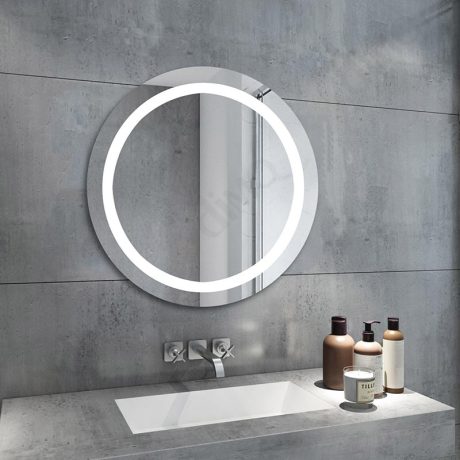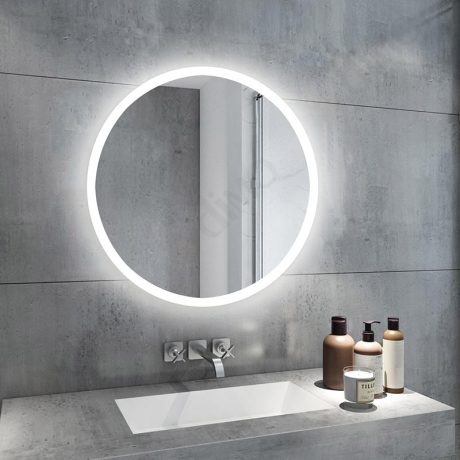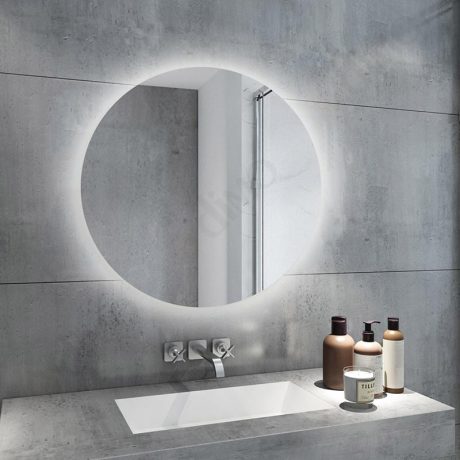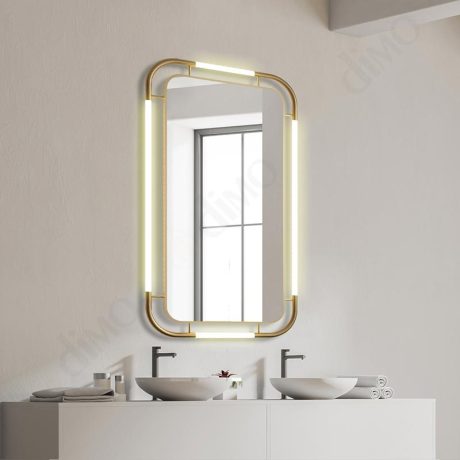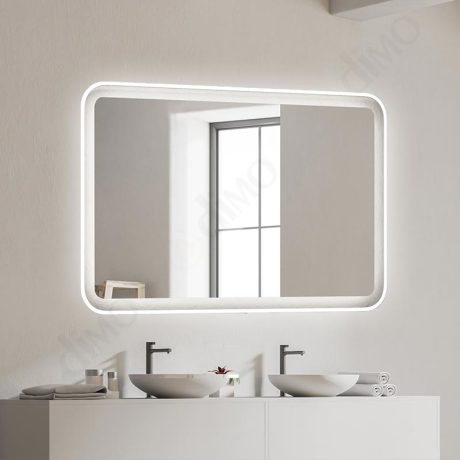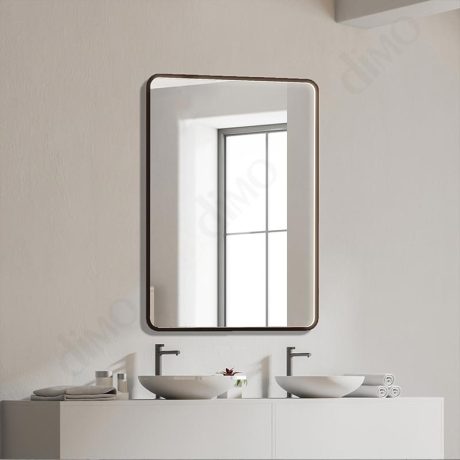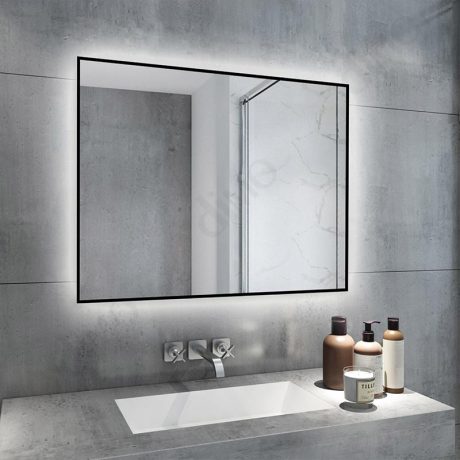
[SILICON VALLEY] – June 7, 2026 – Following the closing of the International Future Habitat Design & Technology Expo (IFHDE) today, the global construction market received a massive wake-up call. The newly released 2026-2031 Global Future Residential Trends Whitepaper, co-published with senior research consultancies, explicitly identifies that the content ecosystem surrounding the Espejo de baño LED is officially the fastest-growing sector in smart residential technology.
No longer a luxury afterthought, the modern illuminated glass has transformed into the primary data gateway for the smart bathroom. Driven by advancements in adaptive optics, solid-state sensors, and localized AI multimodal models, this ongoing hardware evolution is completely redefining real estate value for mid-to-high-end residential developments worldwide.
Índice
Technical Convergence: Decoupling the 2026 Smart Smart Bathroom Core Event
At this year’s expo, leading sanitaryware manufacturers moved away from isolated smart gadgets. Instead, they demonstrated completely cohesive ecosystems where the traditional bathroom vanity acts as a structural foundation for integrated technology rather than a simple wood box with a quartz countertop.
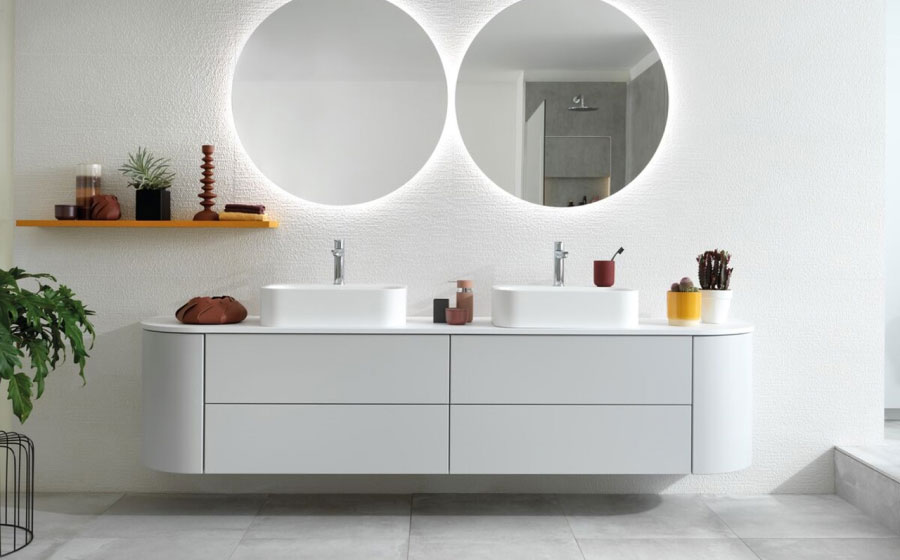
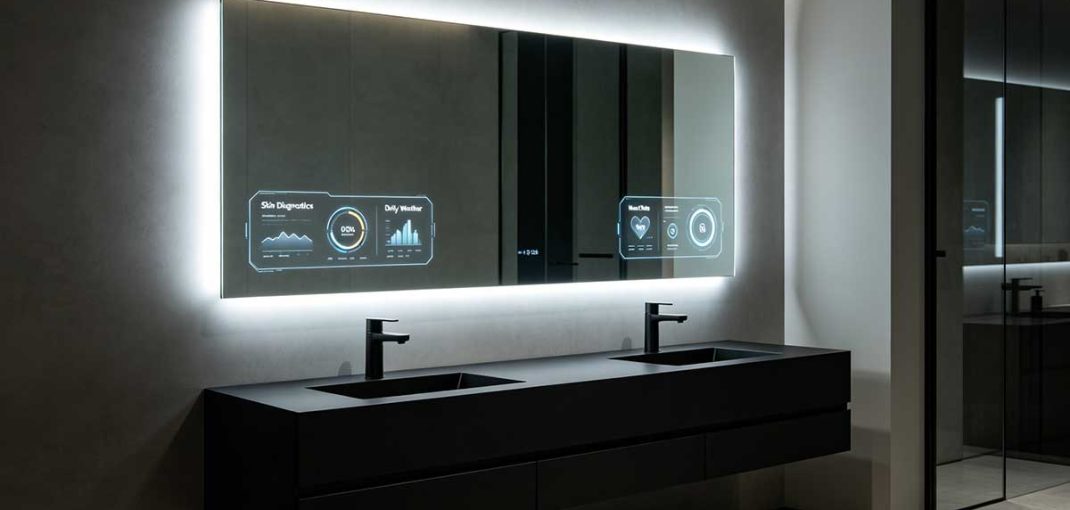
The most notable change lies within the central engineering of the Espejo de baño LED. Premium manufacturers have eliminated basic, single-touch glass panels. Next-generation platforms integrate non-contact, medical-grade optical sensors, millimeter-wave (mmWave) radar arrays, and natural language processors. When a resident stands before the glass to brush their teeth, the reflective surface analyzes skin hydration levels, tracks blood oxygen trends, references sleep metrics from wearable devices, and populates a transparent HUD with personalized health diagnostics alongside local travel alerts.
Paradigm Shift: Transitioning from Component Hardware to Cohesive Environments
This market shift did not happen overnight; it is the direct result of a fundamental change in commercial procurement requirements. Over the last decade, early smart bathroom attempts felt gimmicky, relying heavily on cheap Bluetooth speakers or basic LED strip backlights. However, data from the Asociación Nacional de Cocina y Baño (NKBA) market trends reports shows that multifamily developers and high-end residential buyers now actively reject standalone gadgets, preferring fully unified systems instead.
True spatial intelligence relies on frictionless interaction. In modern architecture, an updated bathroom vanity houses hidden wireless charging coils beneath solid surface countertops, alongside automated soft-close drawers and integrated UVC disinfection chambers. The exhaust fans, smart toilets, and thermostatic shower valves in the room communicate directly with the central Espejo de baño LED over ultra-low latency protocols, creating a closed-loop micro-ecosystem.

Data and Tech Metrics: Quantifying the Five-Year Structural Shift
To give multi-family procurement managers, architects, and estimators a clearer look at this market trajectory, we have compiled the key architectural projections from the 2026-2031 residential forecasting reports.
2026-2031 Smart Vanity Hardware Specifications Matrix
- Optical Optimization: Standardizing a Color Rendering Index (CRI) of ≥ 98 across all contract lines. Built-in “Circadian Lighting Systems” automatically modulate color temperature across a 24-hour cycle to sync with human biological clocks and prevent eye strain.
- Material Advancements: The introduction of third-generation, nano-engineered permanent anti-fog coatings. This eliminates traditional heating coils, slashing individual fixture power draw by 65% and boosting component lifespans to 10+ years.
- Sensor Integration: Millimeter-wave radar replacing outdated passive infrared sensors. Fixtures auto-wake with low ambient lighting upon approach, delay shutdown for 30 seconds after departure, and support gesture-controlled water temperatures alongside automated fall-detection safety alerts.
Projected Global Growth Rates for Smart Bathroom Categories (2026-2031)
| Core Product Classification | 2026 Global Market Valuation (Est.) | 2031 Global Market Valuation (Proj.) | 5-Year Compound Annual Growth Rate (CAGR) |
|---|---|---|---|
| High-Spec Espejo de baño LED Platforms | $3.85 Billion | $7.21 Billion | 13.4% |
| Intelligent Toilet & Bidet Systems | $62.00 Billion | $101.50 Billion | 10.3% |
| Modular, Connected bathroom vanity Assemblies | $51.20 Billion | $84.60 Billion | 10.6% |
| IoT Thermostatic Flow Control Valves | $22.40 Billion | $44.80 Billion | 14.8% |

Industry Feedback: What General Contractors and Architects Are Saying
General contractors and commercial estimators are looking closely at how these shifting trends affect project budgets. From our perspective, this evolution isn’t merely a consumer aesthetic trend; it represents a major optimization of the commercial building supply chain.
Sarah Jenkins, Lead Architect at the National Multifamily Design Alliance (NMDA), shared her perspective during an expo interview:
“In 2026, building a luxury multi-family complex without an integrated Espejo de baño LED platform is a massive leasing risk. Gen Z and millennial tenants view integrated tech as a basic utility, not an upgrade. They expect their living spaces to be as responsive as their phones, even during their morning routine.”
Similarly, Frank Chan, Procurement Director for international commercial fit-out groups, pointed out that matching a contract-grade mirror with a pre-milled bathroom vanity yields significant labor savings. Historically, coordinating finish carpenters, tile setters, and finish electricians created massive scheduling logjams. Transitioning to modular, plug-and-play smart bathroom workstations reduces total finish installation labor time by roughly 45% across large floor plates.
Future Outlook: Moving Beyond 2031
Looking toward the end of the decade, the physical boundaries of residential bathrooms will continue to blur. As Micro-LED manufacturing costs normalize, entire structural walls can function as smart mirrors, alternating between clear reflective surfaces, ambient artwork, and full-scale digital interfaces.
Environmental sustainability will dictate software programming. Future ecosystems will go beyond health tracking to monitor daily utility metrics. Your central smart bathroom processor will automatically manage graywater recovery valves directly beneath the bathroom vanity, monitoring flow rates and showing real-time water and energy consumption directly on your mirror’s display panel.

Summary: Capitalizing on the Spatial Evolution
Buildings are changing because human routines are changing. The five-year window between 2026 and 2031 represents the period where intelligent bathroom tech transitions from an experimental luxury to a fundamental building standard.
Whether your business manufactures precision componentry for an Espejo de baño LED or engineers modular structures for a bathroom vanity, success requires looking past individual product lines. The suppliers who dominate the market over the next decade will be those who design for holistic ecosystem connectivity, fast on-site installation, and long-term asset appreciation.
Referencias
- National Kitchen & Bath Association (NKBA) Long-Term Housing Forecasts: Access global industry research, data benchmarks, and residential construction trend reports through the NKBA Official Portal.
- Underwriters Laboratories (UL) 2108 Safety Standards: Read the official low-voltage lighting safety parameters and regulatory compliance mandates required for high-humidity and commercial environments directly via the UL Standards Catalog.
- National Fire Protection Association (NFPA) National Electrical Code: Review Article 410 regarding damp-location illumination rules on the NFPA Official Platform.
- ADA Standards for Accessible Design: Review Section 307 regarding protrusion limits and accessibility guidelines for wall-mounted commercial fixtures at the ADA Official Government Portal.