Baño Espejo LED Fabricante Proveedor al por mayor

LED Bathroom Mirrors 2026: Dual Light, Anti-Fog, Smart Connectivity

If you are sourcing vanity solutions for commercial developments, luxury hospitality projects, or high-end residential builds, you already know the bathroom is no longer just a functional space. It is a sanctuary. Over the past few months, we have analyzed the shifting demands of modern property buyers and hospitality guests. The verdict is clear: standard mirrors are out, and highly integrated technology is in.

En 2026 LED smart bathroom mirror trend revolves around seamless design, health-centric automation, and commercial-grade durability. But if you look at most generic buying guides, they focus entirely on basic features like “touch buttons” or “pretty lights.”

We see things differently. In 2026, the baseline has shifted. What used to be premium upgrades have now frozen into baseline expectations. Dual lighting sources, predictive defogging, and seamless smart connectivity have officially become the non-negotiable standard for any modern commercial project.

As a B2B buyer, you need to look past the marketing fluff. You need to know what happens three years after installation when a hotel guest leaves the defogger on all day, or how a mirror handles the harsh humidity of a commercial wellness spa. Let’s dive into the technical realities, design shifts, and manufacturing standards that will define the market this year and keep your projects ahead of the curve.

If you are sourcing vanity solutions for commercial developments, luxury hospitality projects, or high-end residential builds, you already know the bathroom is no longer just a functional space. It is a sanctuary. Over the past few months, we have analyzed the shifting demands of modern property buyers and hospitality guests. The verdict is clear: standard mirrors are out, and highly integrated technology is in.

En 2026 LED smart bathroom mirror trend revolves around seamless design, health-centric automation, and commercial-grade durability. But if you look at most generic buying guides, they focus entirely on basic features like “touch buttons” or “pretty lights.”

We see things differently. In 2026, the baseline has shifted. What used to be premium upgrades have now frozen into baseline expectations. Dual lighting sources, predictive defogging, and seamless smart connectivity have officially become the non-negotiable standard for any modern commercial project.

As a B2B buyer, you need to look past the marketing fluff. You need to know what happens three years after installation when a hotel guest leaves the defogger on all day, or how a mirror handles the harsh humidity of a commercial wellness spa. Let’s dive into the technical realities, design shifts, and manufacturing standards that will define the market this year and keep your projects ahead of the curve.


Índice

The New Trinity of Standard Specs: Dual Lighting, Defogging, and Smart Connectivity

If your current supplier is still pitching a single-strip backlit mirror with a manual touch switch, they are selling you yesterday’s inventory. For 2026 projects, three core features form the baseline of any serious RFP.

1. Dual Lighting: Combining Task and Ambient Illumination

For years, projects had to choose between front-lit task lighting (ideal for shaving and makeup) or backlit ambient lighting (perfect for mood and aesthetics). That compromise is dead.
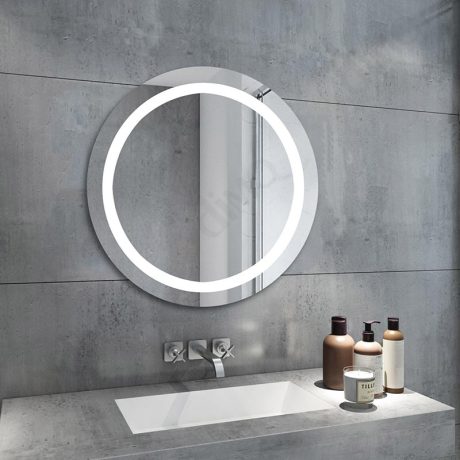
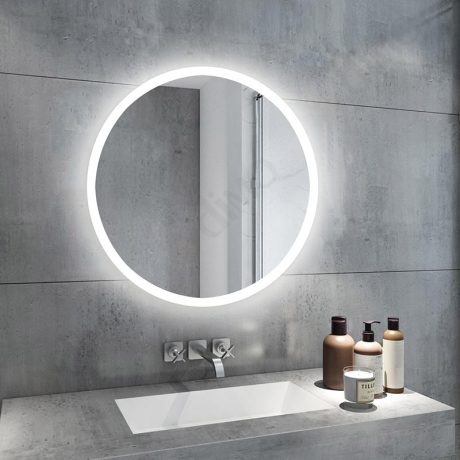
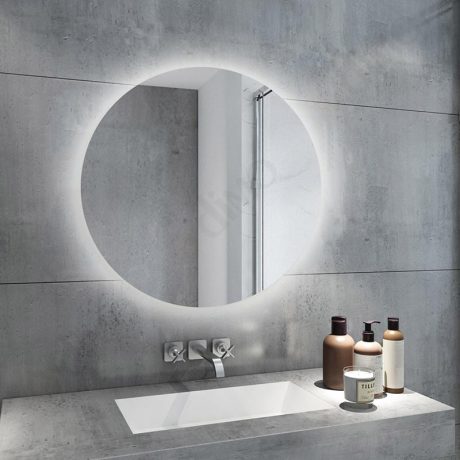
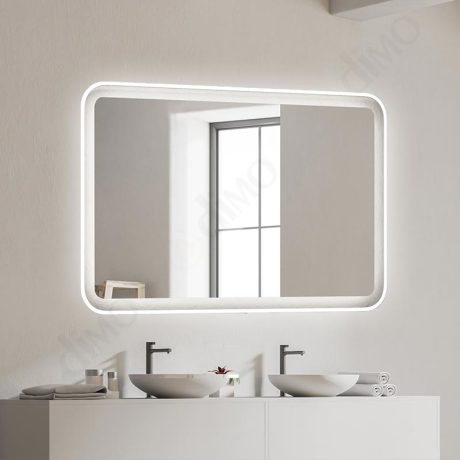
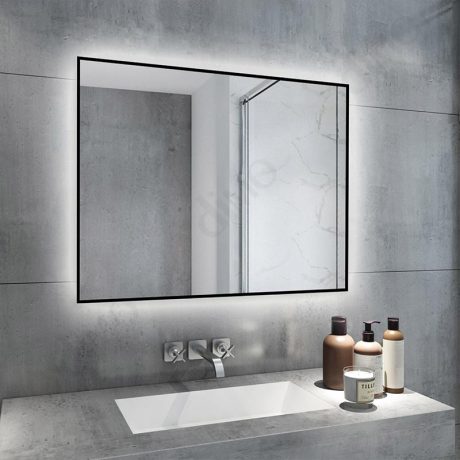
En 2026 LED smart bathroom mirror trend mandates dual-source lighting. By combining high-output front-lit diffusion with a soft, indirect wall-wash backlight, the mirror eliminates harsh facial shadows while simultaneously elevating the architectural depth of the space.
True color accuracy is critical here. Most budget mirrors on the market use low-grade LED strips with a Color Rendering Index (CRI) of 80 or lower. This casts a sickly, greenish hue on the skin.
In 2026, premium projects demand a minimum of CRI 95+, combined with a high R9 value (for red tones). This guarantees true-to-life color accuracy. We recommend pairing this with circadian lighting sync. Through smart home protocols, the dual light sources should automatically mimic natural daylight—cool, crisp light at 8:00 AM to energize the user, and warm, amber tones at 10:00 PM to promote melatonin production.
 
led-bathroom-mirror-with-dual-lighting

2. Predictive Defogging: Beyond the Manual Switch

The old way required a user to press a button after the mirror fogged up, then wait ten minutes for a small square in the middle to clear. The 2026 standard utilizes integrated humidity sensors that automate the entire process. The moment the bathroom humidity crosses a specific threshold, the heating pad activates across 85% of the mirror surface.
More importantly, it includes an auto-shutoff timer. In commercial hospitality properties, guests frequently leave defoggers running for days, burning out the heating elements and driving up energy costs. Automated, sensor-driven defogging is no longer a luxury feature; it is an asset-protection requirement.
 
bluetooth led bathroom mirror with demister defogger anti fog function

3. Smart Connectivity: The Mirror as a Node

The modern bathroom is an extension of the broader smart ecosystem. If a mirror cannot talk to the rest of the building, it is obsolete. 2026 standards require open-protocol smart connectivity, shifting away from clunky, proprietary Bluetooth apps toward universal smart home standards like Matter, Thread, or Zigbee 3.0.
This allows the mirror to integrate seamlessly into a building’s central HVAC or automation system. Imagine a guest checking into a hotel room, and the mirror automatically syncs with the property management system to adjust the lighting temperature, pre-clear the glass based on expected wake-up times, and report energy usage data back to the facilities team.


Commercial Spec Comparison: Budget vs. 2026 B2B Standards

When you are ordering hundreds of units for a multi-family housing project or a resort, making the wrong choice on raw materials can lead to catastrophic warranty claims. Here is how we break down the difference between consumer-grade retail mirrors and true commercial-grade solutions.

Feature / Specification Low-Cost Consumer Grade 2026 B2B Commercial Standard Why It Matters For Your Project
Glass Substrate 4mm Aluminum-coated glass 5mm Copper-Free Silver Glass Prevents black-edge oxidation in high-humidity zones.
Lighting Configuration Single source (Backlit o Front-lit) Dual Lighting (Integrated Front & Backlit) Delivers flawless task lighting while providing architectural ambient glow.
Defogging System Manual on/off button (Small pad) Sensor-Driven Auto-Defog with Shutoff Saves energy and protects internal heating elements from burning out.
Smart Connectivity None or Proprietary Bluetooth Matter / Thread / Zigbee 3.0 Essential for seamless integration into commercial building management systems.
Color Rendering Index CRI 75 – 80 CRI 95+ (High R9) Crucial for accurate skin tones, makeup, and high-end aesthetics.
Grado de impermeabilidad IP44 (Basic splash resistance) IP65 (Fully sealed electronics) Long-term safety and compliance with international building codes.
LED Lifespan & Modules 20,000 hours (Sealed/Glued) 50,000 hours (Field-replaceable) Reduces maintenance costs. If a strip fails, you swap the module, not the whole mirror.

Lessons from the Field: How We Solved a Luxury Eco-Resort’s Maintenance Nightmare

We learned the importance of field-serviceable tech the hard way. A few years ago, our team at DIMO was brought in to salvage a boutique eco-resort project in coastal Florida. The client had previously sourced 120 custom backlit mirrors from a low-cost vendor. Within eight months, over 15% of the mirrors suffered from severe edge-corrosion due to the intense salt-air humidity. Even worse, three of the internal manual defogger switches failed, forcing the resort to rip the entire mirror off the custom woodwork, damaging the drywall in the process.
We stepped in with a radically different approach. We replaced the units with our proprietary 5mm copper-free glass featuring double-layered waterproof backing paint.
We upgraded them to our standard 2026 smart package: automated sensor defogging and dual-source lighting. We also redesigned the chassis. Instead of gluing the electrical components directly to the glass, we engineered a modular slide-out tray housing the driver and smart connectivity controller. If a component fails, hotel maintenance can swap it out from the side in under two minutes without ever removing the mirror from the wall.
Two years later, those mirrors still look pristine. That project taught us that true luxury isn’t just about how a product looks on day one—it is about how easy it is to maintain on day one thousand.


Designing for Spatial Context: Beyond the Rectangle

A major flaw in many contemporary commercial designs is treating the mirror as an afterthought. It should be a structural anchor. The 2026 LED smart bathroom mirror trend moves decisively away from boring, frameless rectangles toward intentional architectural statements.
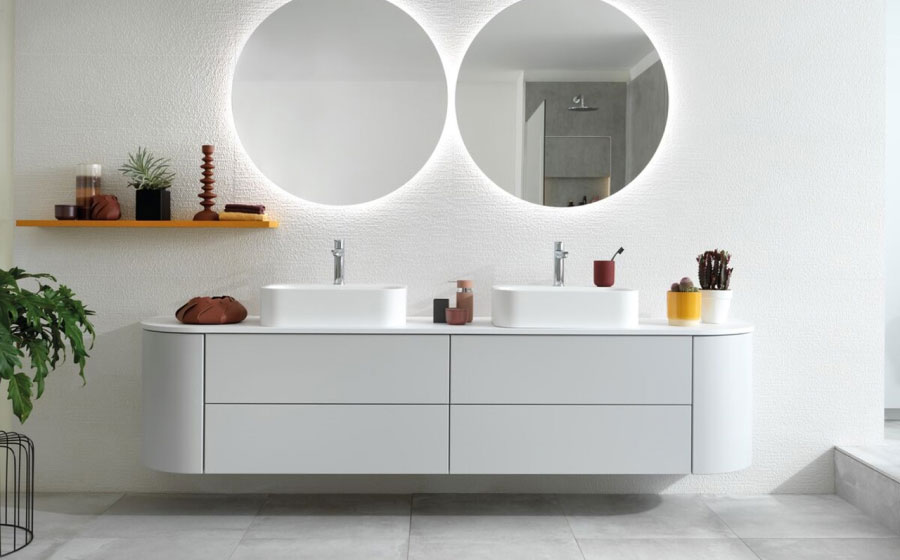
    • The Deep-Set Backlit Portal: For wellness centers and spa-like master baths, designers are opting for round or oval mirrors recessed deeply into custom plaster niches. The dual light source works beautifully here, bouncing softly off the textured wall behind it while throwing crisp task light forward.
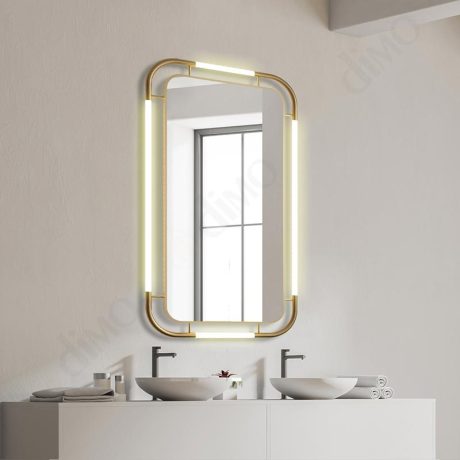
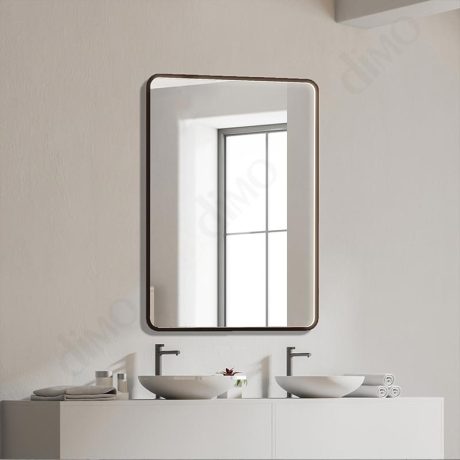
    • The Framed Architectural Accent: Matte black metal frames are holding steady, but we are seeing a massive surge in brushed bronze and raw champagne gold finishes. These frames do double duty: they hide fingerprint smudges on the edges and protect the glass during rough commercial cleaning schedules.
    • Integrated Digital Real Estate: For ultra-luxury hospitality, the connected mirror is becoming an information dashboard. Ultra-thin OLED displays embedded behind the silvering allow guests to check weather, stream news, or adjust room temperature while brushing their teeth, completely disappearing when turned off.


Installation Realities and Compliance Standards

You cannot afford to ignore regulatory compliance when dealing with water and electricity. Every single mirror specified in a commercial project must carry rigorous third-party testing certifications.
For the North American market, requiring UL 962 certification is mandatory for any electrical mirror assembly. This ensures the entire system—including the dual-lighting drivers and defogger pads—has been tested for electrical safety in damp environments. For European projects, look for the CE mark alongside strict compliance with the IEC 60364-7-701 standard, which dictates the zoning rules for electrical appliances installed near bathtubs and showers.
Furthermore, consider the physical installation environment. If you are specifying heavy, oversized 60-inch smart mirrors for a multi-family residential building, standard drywall anchors will not cut it. We always advise our B2B clients to ensure their architectural plans include horizontal wood blocking inside the wall framing during the rough-in phase. It saves hundreds of hours of frustration during the final trim-out.


Moving Forward With Your Next Specification

Choosing the right partner for your vanity supply chain requires looking past the surface. Make sure your vendor can provide certified test reports, clear warranty policies on electronic components, and CAD blocks that match real-world wiring locations.
If you are currently mapping out a hospitality or residential development for next year, let’s connect. Our team can help you review your electrical layouts and customize a solution that balances aesthetic impact with bulletproof reliability. Learn more about our architectural customization services.

La gente también pregunta (FAQ)

1. Why is dual lighting better than traditional single-source lighting in commercial projects?

Single-source mirrors (only backlit or only front-lit) force a choice between aesthetics and functionality. Backlighting creates mood but casts shadows on the face, making grooming difficult. Front-lighting provides excellent utility but can look harsh. Dual lighting balances both simultaneously, providing flawless task light for the user and an elegant ambient glow for the bathroom design.

2. Can smart mirrors integrate into hospitality central management systems (PMS)?

Yes, provided they support universal protocols like Matter or Zigbee 3.0. Modern commercial smart mirrors can connect to IoT gateways, allowing hotel engineering teams to monitor energy consumption, track defogger lifespans, and automatically turn off components when a room is checked out.

3. How do automated defogging sensors save money compared to manual switches?

Manual defoggers rely on the user to turn them off. In commercial settings or hotels, users frequently leave them running for hours or days. This dramatically shortens the lifespan of the heating element and increases building energy costs. Sensor-driven defoggers only activate when specific humidity levels are hit and automatically shut down after a set cycle, drastically reducing operational overhead.
4. What is the difference between IP44 and IP65 ratings for bathroom mirrors?
An IP44 rating means the mirror is protected against solid objects over 1mm and splashes of water from any direction, making it suitable for standard bathroom vanities. An IP65 rating provides total protection against dust ingress and low-pressure water jets, offering much higher durability for high-humidity environments like commercial steam rooms, spas, or hotels.

Referencias y normas del sector

 
SOBRE EL AUTOR
Frank Chan es el Consultor Senior de Producto y Director de Ventas de Dimo, con más de 10 años de experiencia en iluminación LED de alta gama. Ha supervisado el cumplimiento y la instalación de más de 200 proyectos en toda Norteamérica. Frank se dedica a ayudar a los compradores B2B a navegar por los complejos códigos eléctricos para garantizar el éxito del proyecto a largo plazo.

Deja una respuesta

Tu dirección de correo electrónico no será publicada. Los campos obligatorios están marcados con *